Final Project: Non-reformist reforms in tech
View the Project on GitHub Nemonyte04/Signals-Non-reformist-reforms
The Dudley Street Neighborhood Initiative: The Neighborhood That Seized the Right to Plan Its Own Future
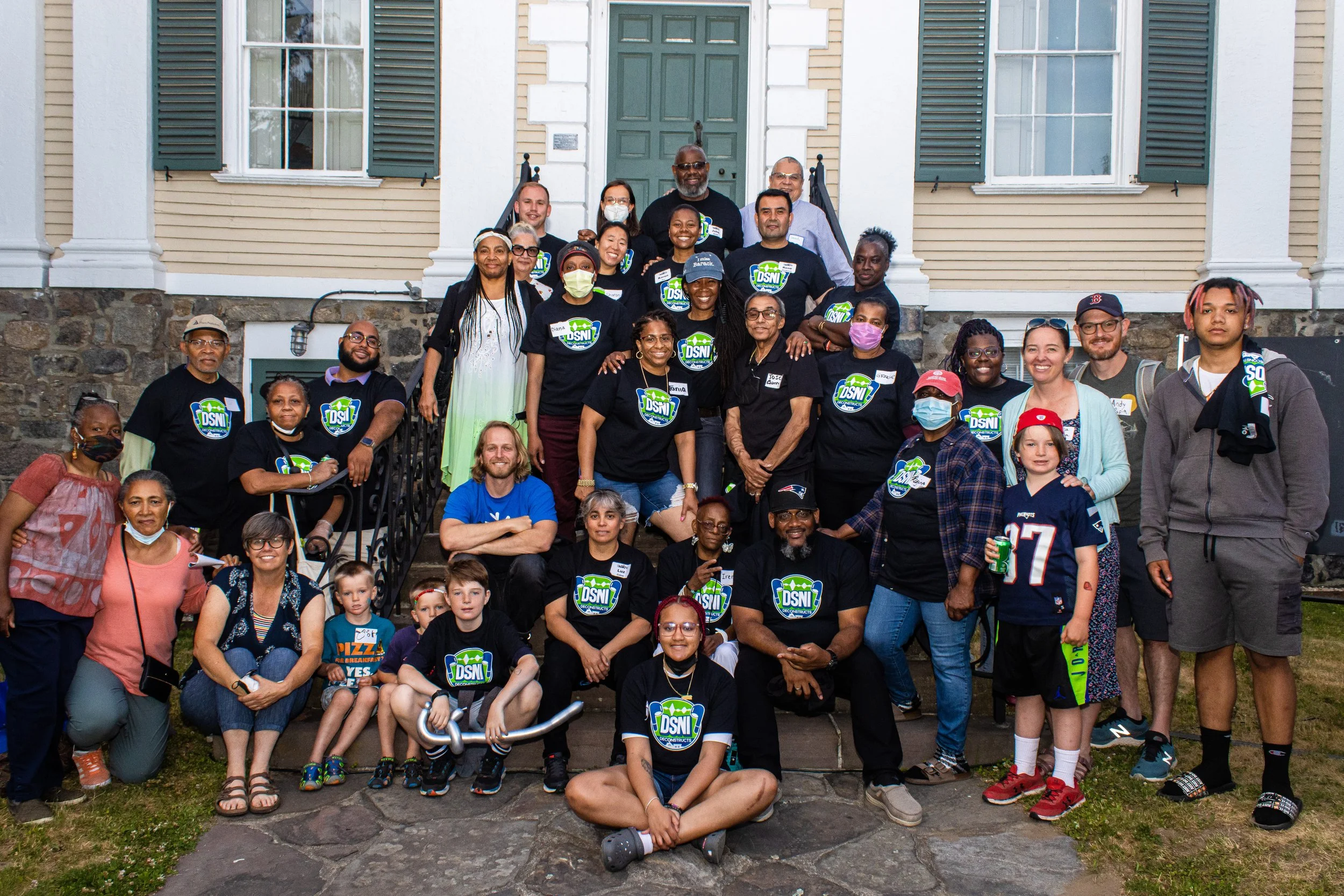 For decades, cities have treated development as something that happens to neighborhoods rather than with them. Low-income communities are expected to accept whatever form of “improvement” is presented to them, plans are created by outside specialists, and land is valued for its market potential. The Dudley Street Neighborhood Initiative (DSNI) in Boston refused that deal.
A neighborhood written off
Dudley Street sat less than two miles from downtown Boston and looked like a different world. Arson, illegal dumping, redlining, and years of abandonment had left much of the neighborhood a patchwork of vacant lots and hollow buildings. On paper, it looked like a neighborhood in freefall (Medoff and Sklar, Streets of Hope, 1994).But Dudley Street was never empty in the human sense. It was home to a deeply diverse community of African American, Latino, Cape Verdean, and white residents, people who understood that what was happening to them wasn’t an accident. Neglect, they knew, is a form of planning (Medoff and Sklar, 1994).
Building power, not just asking for it
In 1984, residents and local organizations formed DSNI with a specific goal: not just better services, but actual control over what redevelopment would look like in their community. This wasn’t a nonprofit brought in to beautify the area. It was a resident-driven planning organization built on the conviction that the people most affected by a neighborhood’s decline should be the ones directing its recovery (DSNI Mission Statement; DSNI, “About Us”).One of their first campaigns made that power visible. In 1986, the “Don’t Dump on Us” campaign pushed back against the use of vacant lots as dumping grounds for toxic waste, a practice that would never have been tolerated in wealthier parts of the city. The campaign forced the city to clean up lots, tow abandoned cars, and take illegal dumping seriously. More than a cleanup, it demonstrated that organized residents could demand and win real change (Flood, “Dudley Street Neighborhood Initiative,” Participedia).
Controlling the land itself
The most significant development occurred in 1988 when DSNI established a communal land trust called Dudley Neighbors, Inc. It became the first and only grassroots organization in the US to be granted the authority of eminent domain through a collaboration with the Boston Redevelopment Authority. This meant that instead of leaving it to outside speculators, the community could use it for playgrounds, gardens, parks, and inexpensive housing (Soifer et al., Community Economic Development in Social Work, 2014; Kennedy, Planning the City Upon a Hill, 1994).
Movement and Reform
More than 600 of the neighborhood’s 1,300 vacant lots were eventually transformed for community use. That’s what makes DSNI more than a resistance story. It didn’t just push back against harm. It built a different model of ownership, one where land serves collective benefit rather than private extraction (Soifer et al., 2014).One detail worth noting: young people were central to this effort from the start. Youth helped design community centers, created public art, and held seats in DSNI’s governance structure. Many of the children who grew up during the organization’s early years became its future leaders. That’s a very different idea of community participation than the standard public meeting where residents are asked to react to decisions already made (DSNI, “Neighborhood Voices”).The DSNI story challenges a deeply held assumption in urban planning: that development expertise belongs to professionals, capital belongs to investors, and communities should be grateful for whatever trickles down. Dudley Street showed that a poor, racially diverse neighborhood could gain genuine legal and institutional authority over its own future when it organized to demand it (Medoff and Sklar, 1994; Soifer et al., 2014).The most meaningful development, it turns out, might not be the one that brings the most money or the newest buildings. It might be the one that leaves the people who live there actually in control.
References
Medoff, Peter, and Holly Sklar. Streets of Hope: The Fall and Rise of an Urban Neighborhood. South End Press, 1994
Soifer, Steven D., Joseph B. McNeely, Cathy L. Costa, and Nancy Pickering-Bernheim. Community Economic Development in Social Work. Columbia University Press, 2014, http://cup.columbia.edu/book/community-economic-development-in-social-work/9780231133951/
Dudley Street Neighborhood Initiative. “About Us.” Dudley Street Neighborhood Initiative, http://www.dsni.org/about-us
Flood, Shailee. “Dudley Street Neighborhood Initiative.” Participedia, http://participedia.net/organization/308
Dudley Street Neighborhood Initiative. “Neighborhood Voices.” Dudley Street Neighborhood Initiative, http://www.dsni.org/neighborhood-voices
Kennedy, Lawrence W. Planning the City Upon a Hill: Boston Since 1630. University of Massachusetts Press, 1994, http://www.umasspress.com/9780870239236/planning-the-city-upon-a-hill/